
 Español
Quick Summary
- Spain officially failed to reach the legally mandated 70% collection rate for single-use plastic beverage bottles, achieving only 41.3% in 2023 according to MITECO — triggering the legal obligation to introduce a nationwide deposit return system.
- The legal deadline for launching Spain's SDDR (Sistemas de Depósito, Devolución y Retorno) is November 2026, though the timeline may extend further given the infrastructure challenge of servicing an estimated 20 billion beverage containers placed on the Spanish market annually.
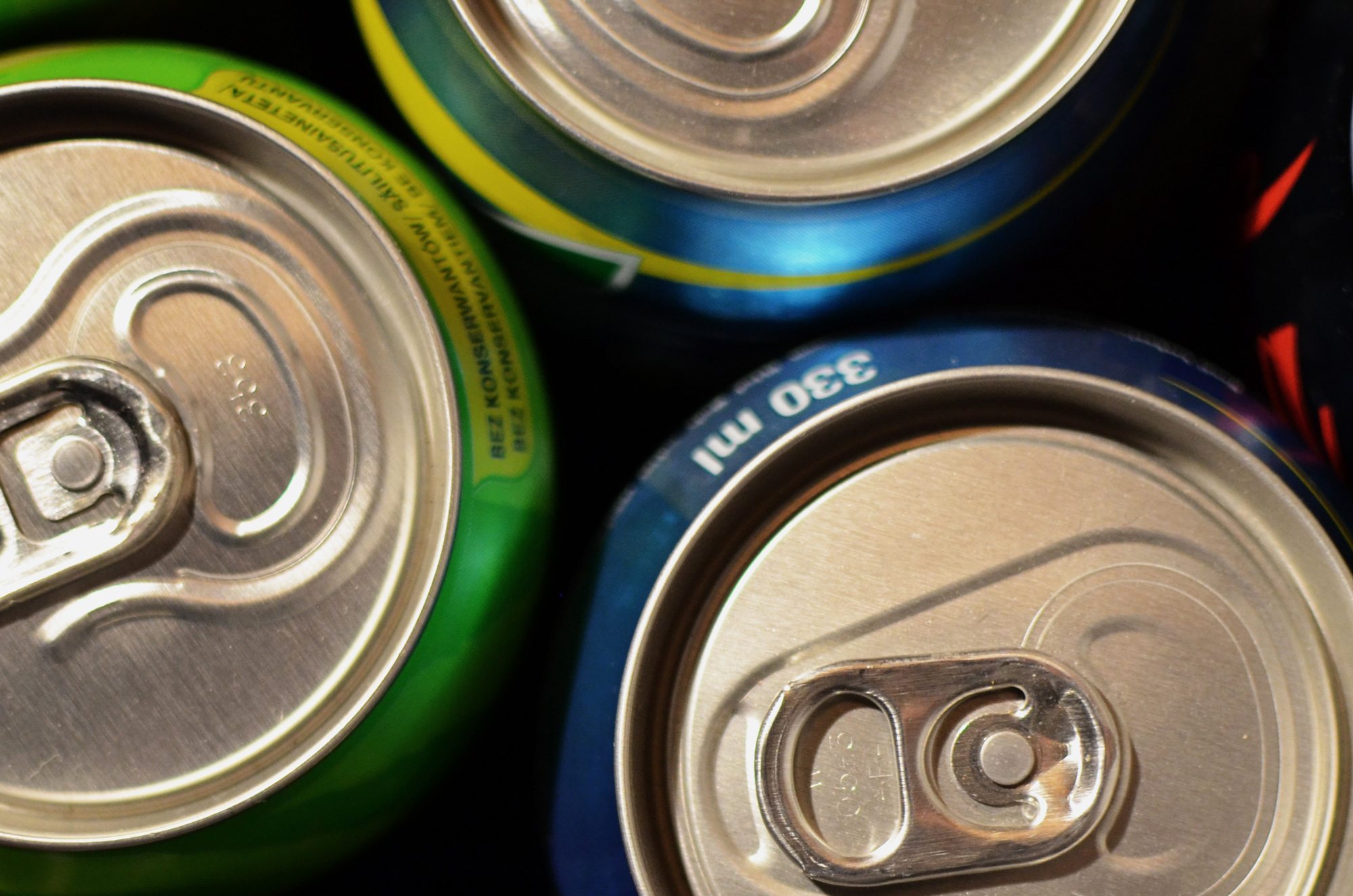
- Containers in scope are expected to include single-use PET plastic bottles and aluminium cans up to 3 litres; the deposit amount has not yet been officially confirmed but is expected to be approximately €0.10 per container, in line with the legal minimum.
- The scheme operator entity is still being established through an administrative authorisation process — retailers and producers should not expect a fully operational rulebook on day one.
- Based on current legislation and neighbouring DRS rollouts, retailers with consumer-facing return points will need to assess whether to install reverse vending machines or operate manual collection, with high-volume supermarkets facing strong operational incentives to automate.
- Producers placing beverages on the Spanish market will be required to register, pay deposit fees to the scheme operator, and meet labelling requirements for covered packaging — obligations that carry administrative lead time regardless of when the exact launch date is confirmed.
Introduction
Spain is approaching a structural turning point in how it manages beverage packaging. For years, the country relied on yellow recycling bins — the familiar contenedor amarillo — to collect plastic bottles and cans from households. That system has been unable to meet the recycling targets set by EU law and embedded in Spain's own legislation: the target was 70% separate collection for single-use plastic beverage bottles by 2023, and Spain reached 41.3%.
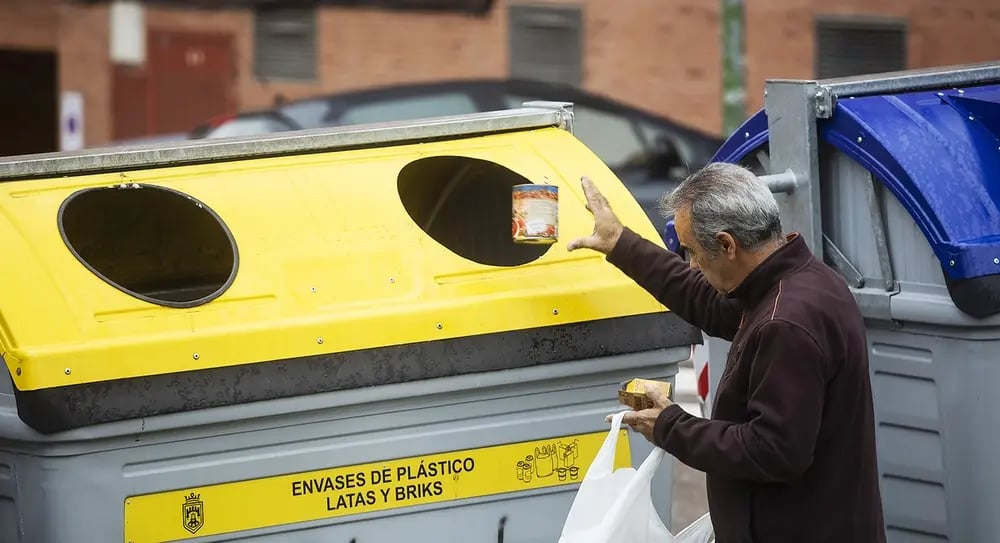
A person incorrectly disposing of steel food containers at the yellow bin, which is only reserved for beverage containers.
The legal consequence of that failure is fixed in Royal Decree 1055/2022: within two years of confirming the miss, Spain must introduce a deposit return system. November 2026 is now the statutory deadline, though implementation complexity may push the operational reality into 2027. For retailers, supermarket chains, importers, and beverage producers operating in Spain, the question is no longer whether the SDDR is coming — it is how much lead time remains, and what decisions need to be made now. This article outlines what is known, what is still uncertain, and what steps businesses can take today based on current legislation and the experience of neighbouring DRS markets.
What Is Spain's SDDR, and How Will It Work?
The SDDR — Sistemas de Depósito, Devolución y Retorno — is a deposit refund system for single-use beverage containers. The core mechanism is straightforward: a consumer pays a small deposit on top of the purchase price when buying a covered beverage, and that deposit is refunded in full when the empty container is returned to a registered collection point. Based on current legislation and the minimum deposit floor set in Royal Decree 1055/2022, the deposit is expected to be approximately €0.10 per container, though the final figure may be adjusted based on consumer studies or scheme operator decisions. The containers in scope are planned to include single-use PET plastic bottles and aluminium cans up to 3 litres — the two container types most closely linked to Spain's collection gap. Glass and carton packaging may be considered in later phases, but are not expected at launch. Unlike the yellow bin system, which is passive and relies entirely on consumer initiative at a kerbside collection point, the SDDR creates a financial incentive to return: consumers lose money if they don't. That shift in incentive design is why countries operating mature deposit systems — Germany, Norway, the Netherlands — consistently achieve collection rates between 90% and 97%, compared to Spain's current 41%.
.jpg?width=2000&height=1000&name=_DSC1387%20(1).jpg)
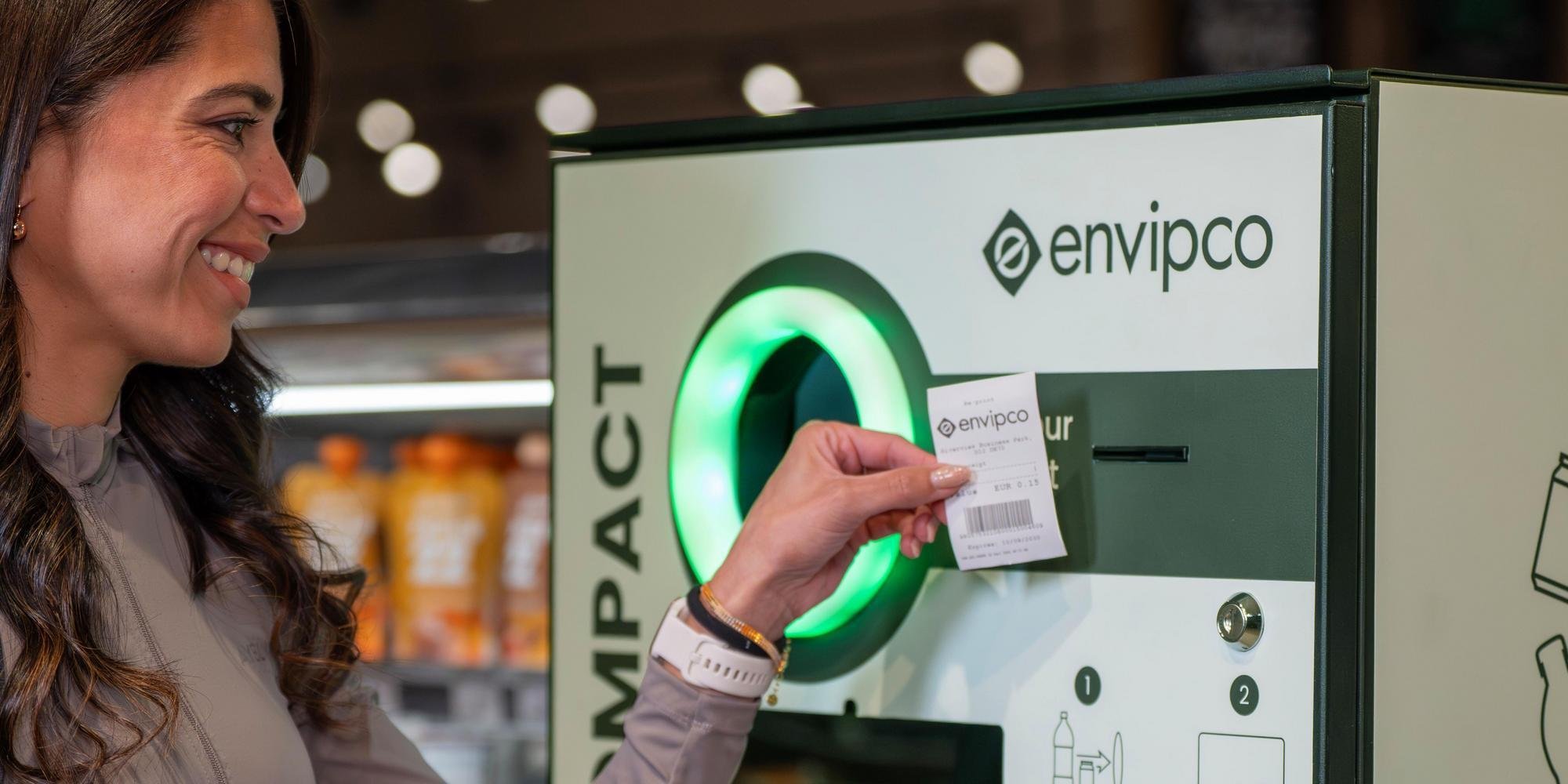
Each recycled container gives the user a fixed amount of money back, even if the container was not initially bought by the same person.
Why Is Spain Moving to a Deposit Return System?
The short answer is that the law requires it, and the data left no room for negotiation. Spain's Act 7/2022 on Waste and Contaminated Soils for a Circular Economy embedded a conditional trigger: if Spain failed to achieve 70% separate collection of single-use plastic beverage bottles, a mandatory DRS must be introduced within two years of the confirmed failure. In November 2024, the government formally confirmed that Spain had not met the target — achieving only 41.3% in 2023 per MITECO data — which set the November 2026 clock running. The volume context makes the gap starker: Spain places approximately 20 billion beverage containers on the market annually, of which an estimated 20 million are properly recycled under the current yellow-bin system. That is not a rounding error — it is a structural failure of the existing model at scale. The political pressure was compounded by a data credibility crisis: Ecoembes, Spain's EPR compliance body, had previously claimed a 71% collection rate for 2021, figures that were later challenged as significantly overstated. That controversy eroded confidence in voluntary compliance mechanisms and accelerated political support for a mandatory deposit system. The EU's Single-Use Plastics Directive adds further urgency: Spain is required to reach 77% collection by 2025 (already missed), 85% by 2027, and 90% by 2029 — targets that are not achievable under the yellow-bin system alone.
What Should Retailers Prepare For Now?
Based on current legislation and the rollout experience of Portugal and Poland, retailers in Spain should anticipate two core operational obligations: accepting returns from consumers and issuing refunds. The question of how returns are accepted — via a reverse vending machine or a manual collection process — is likely to be determined by store size, which is the threshold model used in most European DRS markets. In Poland, for example, retailers with a sales floor above 200 m² are legally obliged to accept returns, with smaller shops able to participate voluntarily. Spain may adopt a similar threshold structure, though the exact parameters have not yet been confirmed. For supermarkets and large-format retailers, the operational case for installing RVMs rather than managing returns manually is strong: at 20 billion containers annually across a national market, any high-footfall store running manual returns will face significant queuing, staffing burden, and container handling logistics, particularly in peak tourist seasons when Spain's HoReCa and convenience retail sectors absorb considerably higher consumer volumes. Retailers should also plan for till system and receipt adjustments: in Portugal's Volta scheme, deposits must be itemised separately on receipts and are not subject to VAT — Spain is likely to adopt a structurally similar approach, which has implications for POS configuration. Infrastructure decisions — including floor space allocation for return points and decisions about RVM procurement — carry the longest lead times of any compliance action, making early assessment essential even while specific rules remain pending.
For high-volume supermarket environments, machines like Envipco's Quantum are engineered to process large container throughput without creating bottlenecks at the return point — a relevant consideration given Spain's container volumes and the condensed nature of peak retail periods.
.jpg?width=2000&height=1000&name=DSC09503%20(1).jpg)
Envipco Quantum XXL installed in Portugal
What Should Producers and Importers Prepare For?
Producers and importers placing beverage products in covered containers on the Spanish market face a separate set of obligations from retailers, and those obligations begin upstream of the consumer. Under deposit return schemes, producers are typically required to register with the scheme operator, pay a deposit fee for every covered container placed on the market, and meet labelling requirements — including a deposit symbol on containers that allows RVMs and consumers to identify eligible packaging.
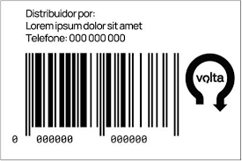 In Portugal's Volta scheme, the Volta horseshoe-arrow symbol became a mandatory packaging element at launch, and containers without the mark cannot be accepted at return points.
Spain's SDDR is expected to operate on the same principle, meaning producers need to factor in label redesign lead times, particularly for beverage lines with long print-cycle commitments. The administrative registration process also requires lead time: scheme operators in mature DRS markets typically open producer registration months before launch, and late registrants can face complications ranging from compliance gaps to logistical confusion at import level. Importers and distributors should note that in most European DRS frameworks, the obligation attaches to whoever first places the container on the domestic market — not the original brand owner. In practical terms, that means importers of foreign beverage brands may carry the registration and deposit reporting obligation, not the brand itself. The selection of Spain's scheme operator entity remains in administrative process, so producers cannot register yet — but they can prepare the documentation, begin internal labelling reviews, and identify which product lines will require changes.
What Can Spain Learn From Portugal and Poland?
Spain is not entering this process without neighbours who have recently gone through it — and both Portugal and Poland offer directly transferable lessons. Portugal's Volta deposit return system launched on 10 April 2026, making it the first full-scale DRS in continental Southern Europe and the most geographically and commercially comparable reference point Spain has. One of the clearest lessons from Volta's launch is the HoReCa integration challenge: Portugal built its scheme with hotels, restaurants, and catering venues included from day one, given the country's tourism economy. Spain's HoReCa sector is even larger, and the distribution of container waste through bars, restaurants, and hospitality venues creates a fundamentally different collection geography than a purely supermarket-anchored scheme. Any Spanish SDDR that focuses primarily on large retail will likely underperform in coastal and urban tourist areas where HoReCa generates a disproportionate share of container waste. From Poland, which launched its System Kaucyjny on 1 October 2025 across a market of approximately 20 billion containers annually — comparable in scale to Spain — the practical lesson is that the decentralised multi-operator model creates registration complexity for producers, and that retailers face real compliance pressure from the outset even when consumer behaviour takes time to adjust. Poland's scheme also demonstrated that retailers choosing between RVM and manual collection are making a long-term operational decision, not just a compliance one: manual collection at meaningful container volumes creates sustained staff overhead. For medium and large supermarkets, the Envipco Flex™ has provided a practical entry point into automated returns — balancing container volume with space and cost constraints.
What Is Still Uncertain About Spain's SDDR?
Despite the November 2026 statutory deadline, several operational parameters remain unresolved, and businesses should plan around uncertainty rather than wait for a final rulebook. The scheme operator entity has not yet been authorised: the administrative process involves an initial Community of Madrid authorisation (up to six months) followed by Ministry validation (up to another six months), which means a fully operational governing body may not exist until late 2026 at the earliest — and could slip into 2027. The deposit amount, while expected to be approximately €0.10, has not been officially confirmed and remains subject to consumer studies and scheme design decisions. The threshold for mandatory retailer participation — which store size triggers the obligation to accept returns — has not been legislated at time of writing. The treatment of glass and carton packaging remains under discussion; these may be included in later phases of the SDDR but are not expected at launch. Whether Spain will use a centralised IT and barcode infrastructure (as Portugal did with Sensoneo) or allow operator-level variation also remains unclear. The EU's new Packaging and Packaging Waste Regulation (PPWR), effective from 2025, may trigger adjustments to Royal Decree 1055/2022 during 2025–2026, potentially adding or shifting requirements. Based on the experience of countries that have launched DRS at scale, the final operational details often emerge in the six months before launch — meaning businesses that have done preparatory work are in a significantly better position than those who waited for certainty before acting.
Frequently Asked Questions About Spain's SDDR
When will Spain's SDDR launch?
The statutory deadline under Royal Decree 1055/2022 is November 2026. Given the scale of the infrastructure required and the ongoing scheme operator authorisation process, the operational launch may realistically extend into 2027. No official revised date has been confirmed as of 2026.
Which containers will Spain's SDDR cover?
Based on current legislation, the SDDR is expected to cover single-use PET plastic bottles and aluminium cans up to 3 litres. Glass and carton packaging may be included in later phases but are not confirmed for the initial launch.
How much will the deposit be in Spain?
The minimum deposit floor set in law is €0.10 per container. The final deposit amount will be determined by the scheme operator once authorised, and may be adjusted upward based on consumer research and operational costs. No official figure has been confirmed.
Do Spanish supermarkets need to install reverse vending machines?
Likely not as an absolute legal requirement, but large-format retailers are expected to be obliged to accept returns — and running manual collection at meaningful volumes creates significant operational burden. RVMs are the standard infrastructure solution in high-volume European DRS markets, and the commercial case for automated returns is strong for supermarkets above a certain footfall threshold.
What should beverage producers do to prepare for Spain's SDDR? Producers should identify which product lines will require deposit labelling changes, begin internal documentation reviews for registration with the scheme operator once authorised, and assess whether their importer or distribution partners in Spain carry the primary registration obligation. Waiting until the scheme operator is formally approved before beginning any preparation is likely to leave insufficient lead time for label and administrative changes.
Conclusion
Spain's SDDR is not a hypothetical — it is a legally triggered obligation backed by confirmed data showing that the country's existing recycling system failed its targets by a significant margin. The November 2026 statutory deadline, while subject to real-world delays, defines the window that retailers and producers have to act. High-volume retailers should begin infrastructure and POS assessments now rather than waiting for final scheme rules that may not arrive until six months before launch. Producers and importers face lead times for labelling and registration that are not compressible regardless of when the scheme operator is formally authorised. Portugal and Poland offer directly applicable operational lessons for both groups — on HoReCa integration, RVM vs. manual tradeoffs, and the registration complexity that comes with a new scheme. The retailers and producers who treat pre-launch uncertainty as a preparation window rather than a reason to wait will be operationally ready when Spain's SDDR goes live.
Ready When Spain Is
Envipco works with retailers and scheme operators across Europe to plan, deploy, and scale RVM infrastructure for new and transitioning DRS markets. Whether your operation needs a high-throughput automated solution or a compact return point suited to mid-size retail, our team can help you assess the right configuration before Spain's scheme rules are finalised. Get in touch to start the conversation.