
Quick Summary
- Groceries retailers in urban areas with under 100m² of retail space are automatically exempt from operating a return point and do not need to register with Exchange for Change.
- Rural groceries retailers of any size, and all retailers at 100m² and above, must register with Exchange for Change even if they later apply for an exemption.
- Two application-based routes exist beyond the automatic exemption: proximity-based and premises-based.
- In urban areas, stores between 100m² and 199m² may apply on size grounds; in rural areas the equivalent line is below 200m².
- There is a formal presumption against granting a size-based exemption to any store of 200m² or more.
- The UK Deposit Return Scheme goes live on 1 October 2027 across England, Scotland and Northern Ireland, with a 20p deposit on in-scope containers.
Introduction
With the UK Deposit Return Scheme (DRS) going live on 1 October 2027, thousands of independent retailers are trying to answer one question before they think about anything else: does this apply to my shop at all? The answer matters commercially, not just legally, because a return point brings floor space commitments, staff time and a handling fee, while an exemption removes all three. Research from the Association of Convenience Stores found that 48% of convenience retailers were still unaware of the scheme in mid-2026, which means a large part of the sector has not yet started this assessment. The exemption framework published by Exchange for Change, the scheme administrator, is deliberately built on measurable criteria so retailers can self-assess rather than wait for a ruling. This article walks through all three exemption routes as they are actually written: the automatic urban exemption based on retail space, the proximity-based exemption where another return point serves your catchment, and the premises-based exemption where your building physically cannot host a machine. By the end you will know which category your store falls into, what evidence you would need to apply, and what to plan for if you are not exempt.
Who Actually Has to Operate a Return Point Under the UK DRS?
The obligation to host a return point falls only on "groceries retailers", which Exchange for Change defines as supermarkets of any size, grocery stores, convenience stores, and newsagents that sell groceries. If your business does not fall into one of those four categories, you are outside the return point duty entirely, though other obligations may still apply to you as a seller of deposit-bearing drinks. Hospitality venues in England and Northern Ireland are not required to operate public return points or to apply for a formal exemption, and in Scotland hospitality retailers have no obligation to charge a deposit or operate a return point, but must retain scheme packaging for collection. Online groceries retailers have no mandatory return point obligation either, although they may voluntarily register as takeback service providers, which Exchange for Change actively encourages as a way to serve housebound, elderly and disabled customers. Vending machine operators are also outside the duty, but must display a notice on each machine stating that deposits are charged and showing where the nearest return point is. The practical point is that the return point duty is narrower than most retailers assume, and the first step in any self-assessment is confirming you are a groceries retailer at all. If you are, the next question is your floor area and your location classification.
What Is the 100m² Urban Automatic Exemption?
Groceries retailers in an urban area with a retail space under 100m² are automatically exempt from operating a return point, and they do not need to register with Exchange for Change at all. "Automatic" here means exactly what it says: there is no application, no evidence pack and no waiting for a decision. Two definitions decide whether you qualify, and both are more precise than they first appear. Retail space means the customer-facing internal floor area used for the retail sale or display of products, which excludes dedicated storage areas, office space and back-of-house facilities, so the figure on your lease is usually not the figure that matters here. Urban is defined by official government classifications rather than by intuition: England uses the Office for National Statistics 2011 Rural Urban Classification of Output Areas, Northern Ireland uses the NISRA Urban-Rural Classification 2015, and Scotland uses classes 1 and 2 of the Scottish Government Urban Rural Classification 2020. A rural store under 100m² does not get this exemption and must register, which is one of the most common misreading of the rule. Automatically exempt stores still have one obligation: they must display information telling customers how a deposit can be redeemed, with the required notice due from Exchange for Change in early 2027.
How Does the Proximity-Based Exemption Work?
The proximity exemption exists for retailers who are obligated on paper but whose customers are already well served by a nearby return point. It is available to urban groceries retailers above 100m² and to rural groceries retailers of any size, and it is granted only where Exchange for Change has designated a "catchment return hub" serving your catchment area. That hub must be a non-exempt return point located within the same settlement or along the normal grocery corridor, it must be within reasonable proximity of your premises, and it must offer capacity and opening hours proportionate to the number of exempt stores assigned to it. Notably, no fixed distance threshold is prescribed anywhere in the criteria; Exchange for Change exercises judgement based on local geography, transport availability and consumer expectations, with more weight given to access challenges as an area becomes more rural. Two limiting conditions catch out applicants who assume proximity is a formality: an exemption will not be granted if it would leave the settlement without a compliant hub, and applications must be site-specific, so a chain cannot apply group-wide on the basis of corporate policy. Exemptions granted under this route are reviewable at any time and must be renewed after 36 months in England and Northern Ireland, and if the alternative return point closes or stops complying, your exemption is reviewed. In practice this means a proximity exemption is a live arrangement rather than a permanent release from the duty.
When Can a Retailer Claim a Premises-Based Exemption?
The premises-based exemption is for stores where the building itself, rather than the wider return network, makes hosting a return point unreasonable, and Exchange for Change states plainly that it will be granted only in exceptional circumstances. An applicant must show a material, site-specific constraint under one of five qualifying grounds, and must also show that removing that constraint would require structural or operational alteration that is unreasonable. The grounds are location, layout, size, design and construction. Layout claims typically rest on installation compromising emergency egress routes as certified by a competent fire assessor, or on the premises having no back-of-house storage, and require scaled floorplans plus independent verification of the circulation impact. Design covers listed or protected buildings where the necessary works would likely be refused planning or listed building consent, supported by written planning advice, and construction covers a verified power supply that cannot support an RVM where the upgrade would need network reinforcement beyond the boundary of the premises. The criteria are equally explicit about what does not qualify: aesthetic objections, minor facade changes, planning uncertainty without written indication from the authority, minor electrical upgrade costs, meter relocation inconvenience, and cost on its own. Incomplete applications are automatically refused, so the evidence pack matters as much as the underlying case.
What Does the Size-Based Route Mean for Stores Between 100m² and 200m²?
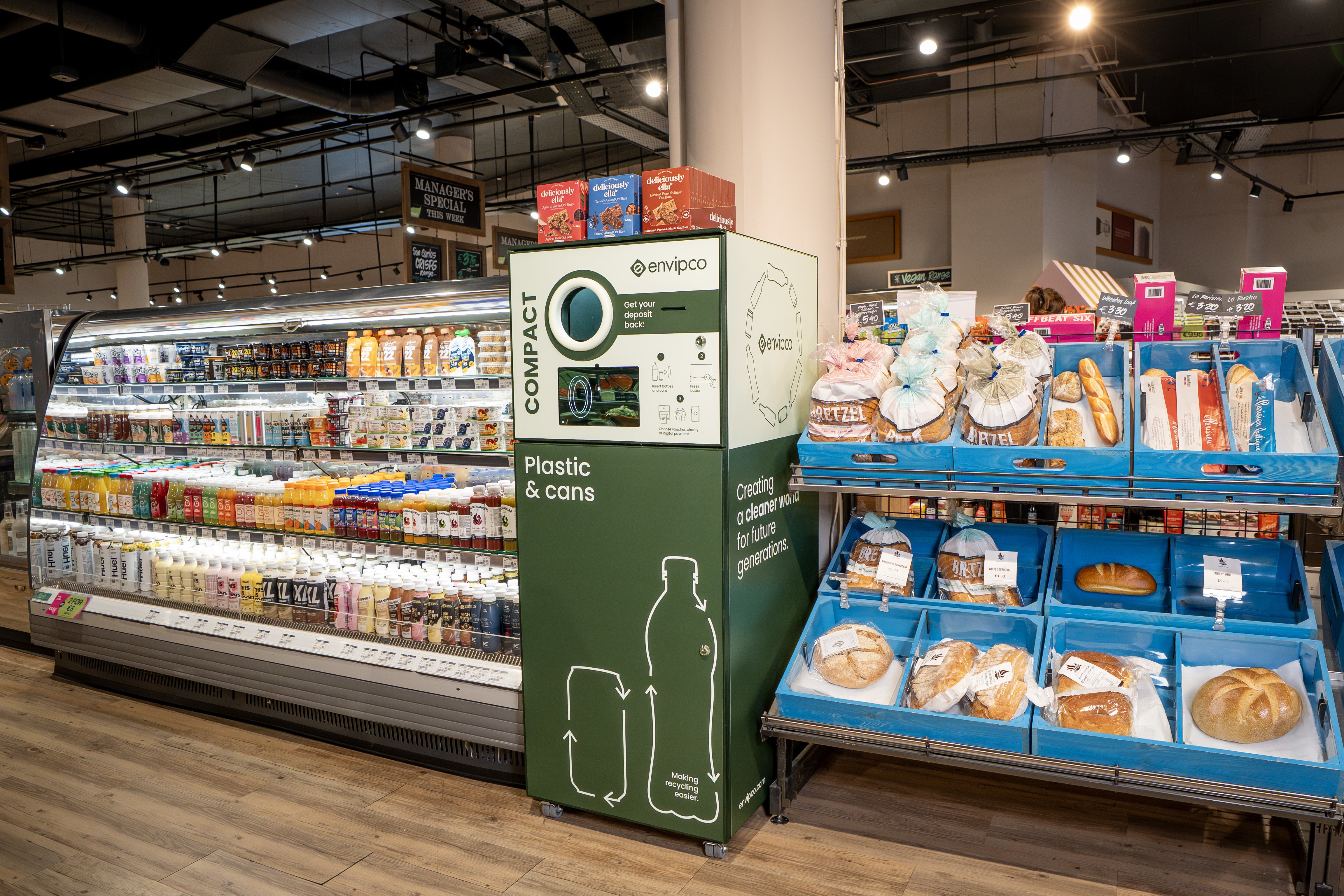
Size sits inside the premises-based exemption, and it is the route most relevant to tier-two independents who are just over the automatic threshold. In urban areas, a groceries retailer with a retail space between 100m² and 199m² may apply for an exemption on size grounds, and in rural areas the equivalent line is a retail space below 200m². Retailers above those figures may still apply, but there is an explicit presumption against granting an exemption to any store of 200m² or more, which makes 200m² the practical ceiling for this argument. Because this route sits within the premises category, the same threshold test applies: a material site-specific constraint plus evidence that reasonable alteration would not solve it, so floor area alone is an eligibility gate rather than an automatic pass. Retailers in the 100m² to 199m² band therefore face a genuine commercial decision rather than a purely legal one, since a granted exemption removes the handling fee income and the footfall that a return point generates, while an unsuccessful application leaves them installing a machine later and under more time pressure. For stores in this band that decide to operate rather than apply, machine footprint becomes the deciding variable, and entry-level units such as Envipco's Compact are built for exactly this profile of store: limited space, low to moderate throughput, and no appetite to lose a shelf bay to compliance.
What Should You Do If You Are Not Exempt?
If you are a groceries retailer who is not automatically exempt, your first obligation is registration with Exchange for Change, and that applies even if you intend to apply for an exemption afterwards. From go-live you will need to charge a deposit on every in-scope container you sell, take back every in-scope container a consumer returns, refund the deposit, store returned containers for collection, and display scheme information including how to complain and how to contact Exchange for Change. You will also need to sell only in-scope drinks from producers registered with Exchange for Change, all carrying the scheme return code and DRS logo. On the income side, return point operators receive a return handling fee, reported at 3p per container for manual return points and 5p for automatic return points up to 225,000 annual returns, alongside a grant scheme worth £60 million over the first three years. The planning questions that follow are practical: how many containers a week will you take back, how much back-of-house space the stored containers need between collections, and whether manual handling or a machine is the better use of your staff time. Retailers deciding between formats often start by working through how to choose the right reverse vending machine for a store, since throughput and footprint drive almost every other decision. Whichever way you go, the assessment is easier now than it will be in 2027, when tens of thousands of stores are making the same call at the same time.

Frequently Asked Questions About UK DRS Return Point Exemptions
Are small shops exempt from the UK Deposit Return Scheme?
Groceries retailers in urban areas with under 100m² of retail space are automatically exempt from operating a return point and do not need to register with Exchange for Change. Small rural stores are not automatically exempt and must register, though they may apply for an exemption.
Do I need to register with Exchange for Change if I plan to apply for an exemption?
Yes. Any groceries retailer who is not automatically exempt must register with Exchange for Change, regardless of whether they intend to apply for a proximity or premises-based exemption. Registration and exemption are separate processes.
How is retail space measured for the 100m² threshold?
Retail space means the customer-facing internal floor area used for the retail sale or display of products. Dedicated storage, office areas and other back-of-house facilities are excluded from the measurement.
Can a retail chain apply for a group-wide exemption?
No. Applications must be site-specific, and an applicant cannot rely on corporate policy or a group-wide assessment. Each premises is assessed individually against the criteria.
How long does a UK DRS return point exemption last?
In England and Northern Ireland, granted exemptions run for three years and require renewal after 36 months with updated evidence. In Scotland, exemptions are subject to review by Exchange for Change at any time, and any exemption can be revoked if circumstances materially change.
Conclusion
The UK exemption framework is built on three distinct routes, and only one of them requires no action at all. Urban groceries retailers under 100m² are exempt automatically and never register. Everyone else registers first, then applies if they have a case, either because a designated catchment return hub already serves their customers or because their premises cannot reasonably host a machine. Size sits inside the premises route, with 100m² to 199m² urban and below 200m² rural as the eligible bands, and a presumption against anything at 200m² or above. Exemptions are not permanent: they are reviewable, revocable, and renewable every 36 months in England and Northern Ireland. For retailers close to the thresholds, the more useful question is not whether an exemption is available but whether it is the better commercial outcome once the handling fee and footfall are counted.
Planning for a Return Point?
If your store falls outside the exemption criteria, the practical next step is matching a machine to your floor space and container volumes rather than the other way round. Envipco's Compact is designed for convenience-format stores with limited space and low to moderate throughput, and our larger Flex™ and Quantum lines cover higher-volume sites. Get in touch with our UK team to work through the right fit before the 2027 deadline.